
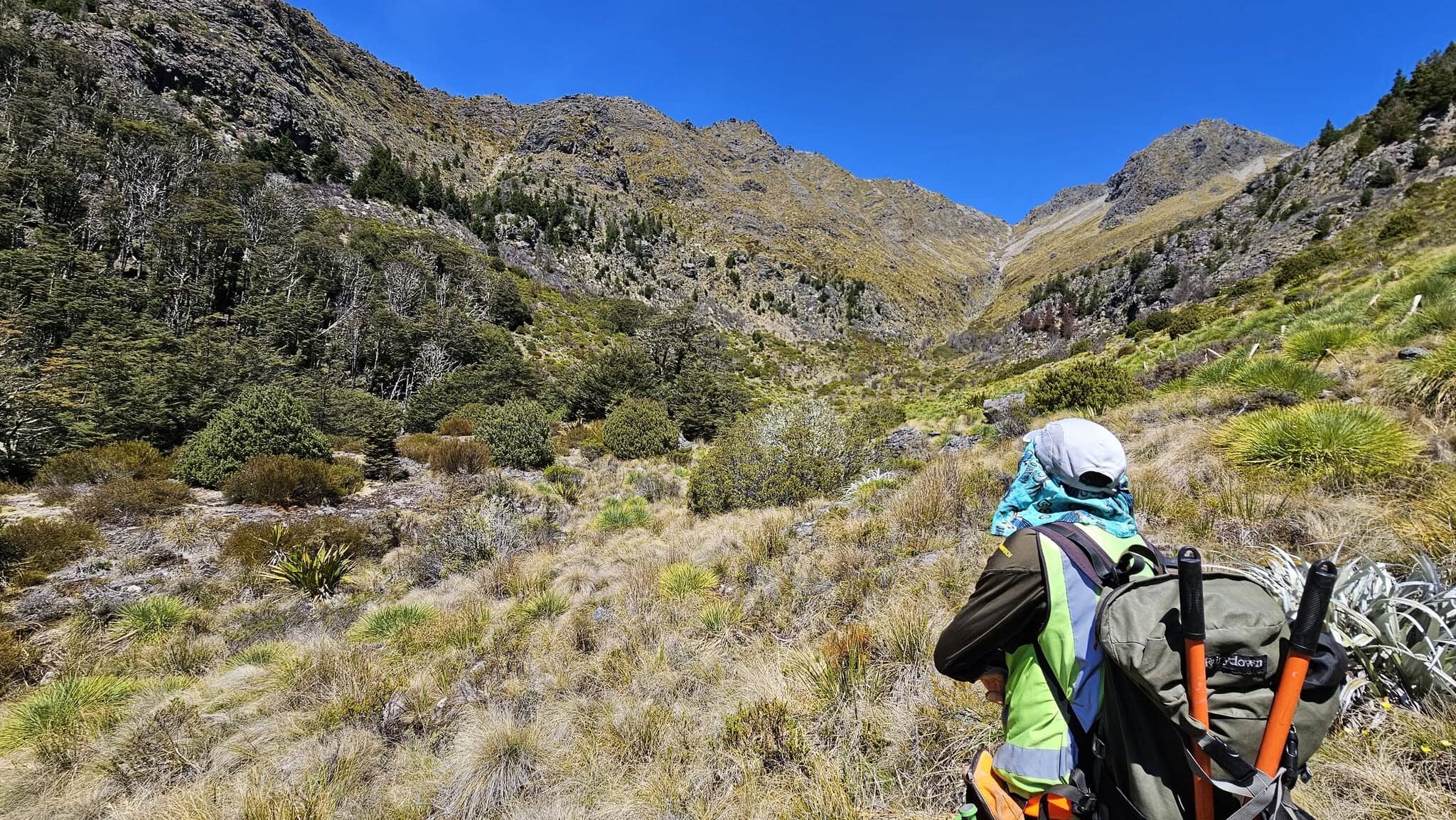
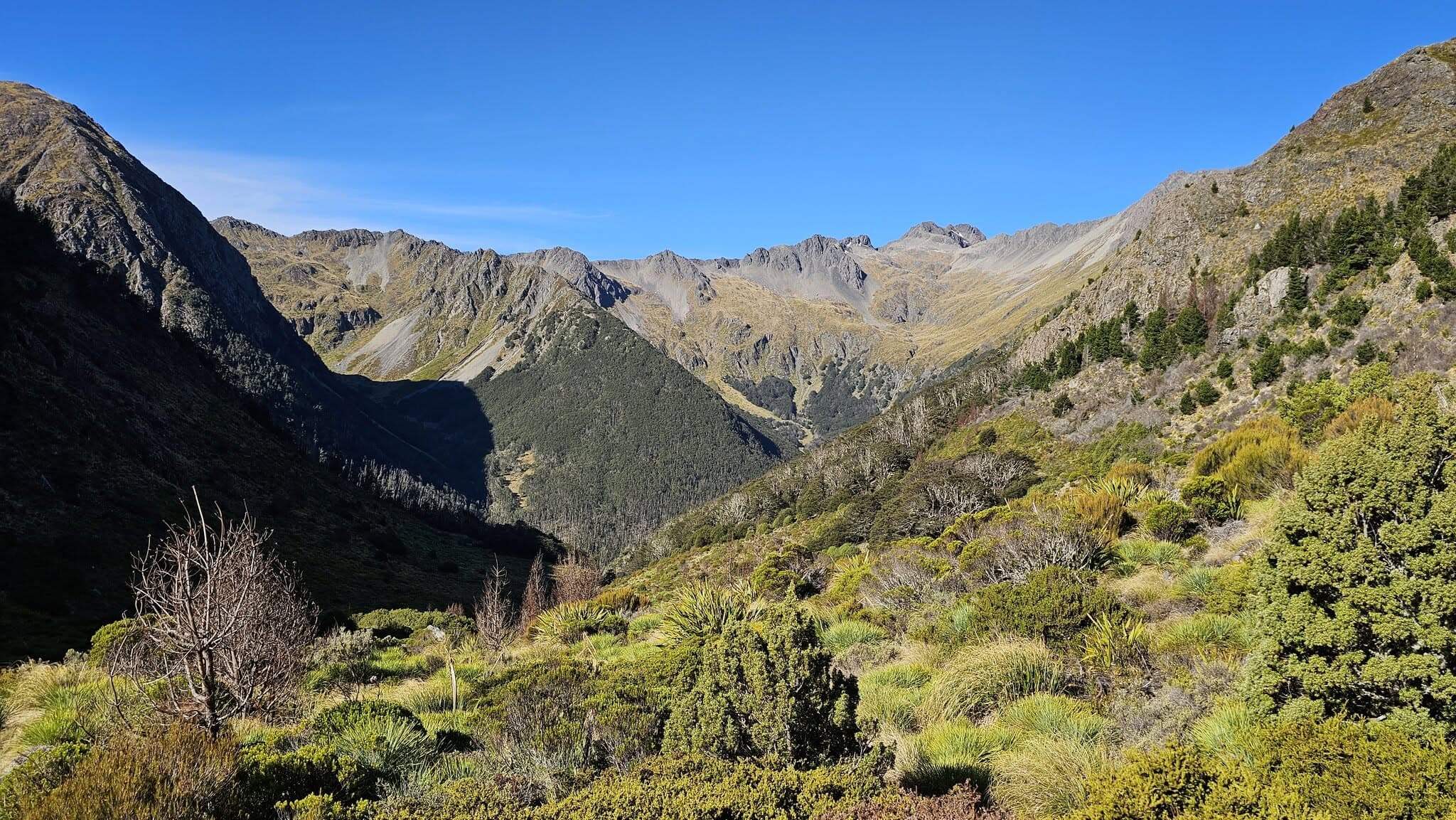
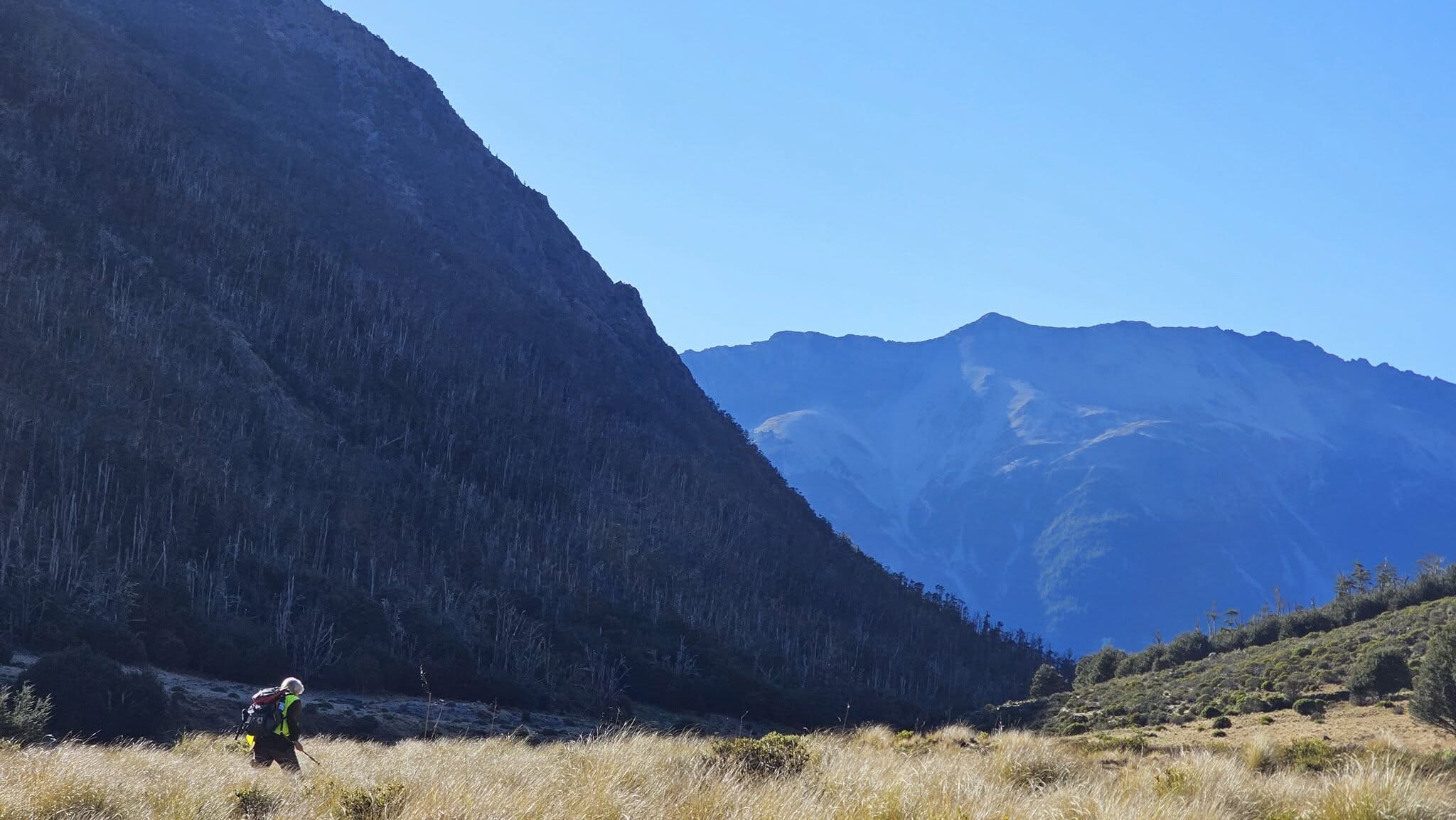
There is a valley in the South Marlborough backcountry that most New Zealanders will never visit. You reach it by 4WD to Greig's Hut, then on foot through native beech forest — emerging into the Lost Stream catchment, where the landscape changes completely.
Where the logging roads end and the beeches begin, something remarkable is still intact. And a dedicated group of volunteers is determined to keep it that way.
In November 2025, fourteen people spent three and a half days at Lost Stream, armed with saws, drills, and poison — working to remove wilding pines from one of Marlborough's most precious wild places. The trip was funded in part through a $10,000 grant from the Top of the South Community Foundation's Marlborough Environment Fund and generous donors, covering helicopter transport of supplies to the hut, tools, and general expedition costs.
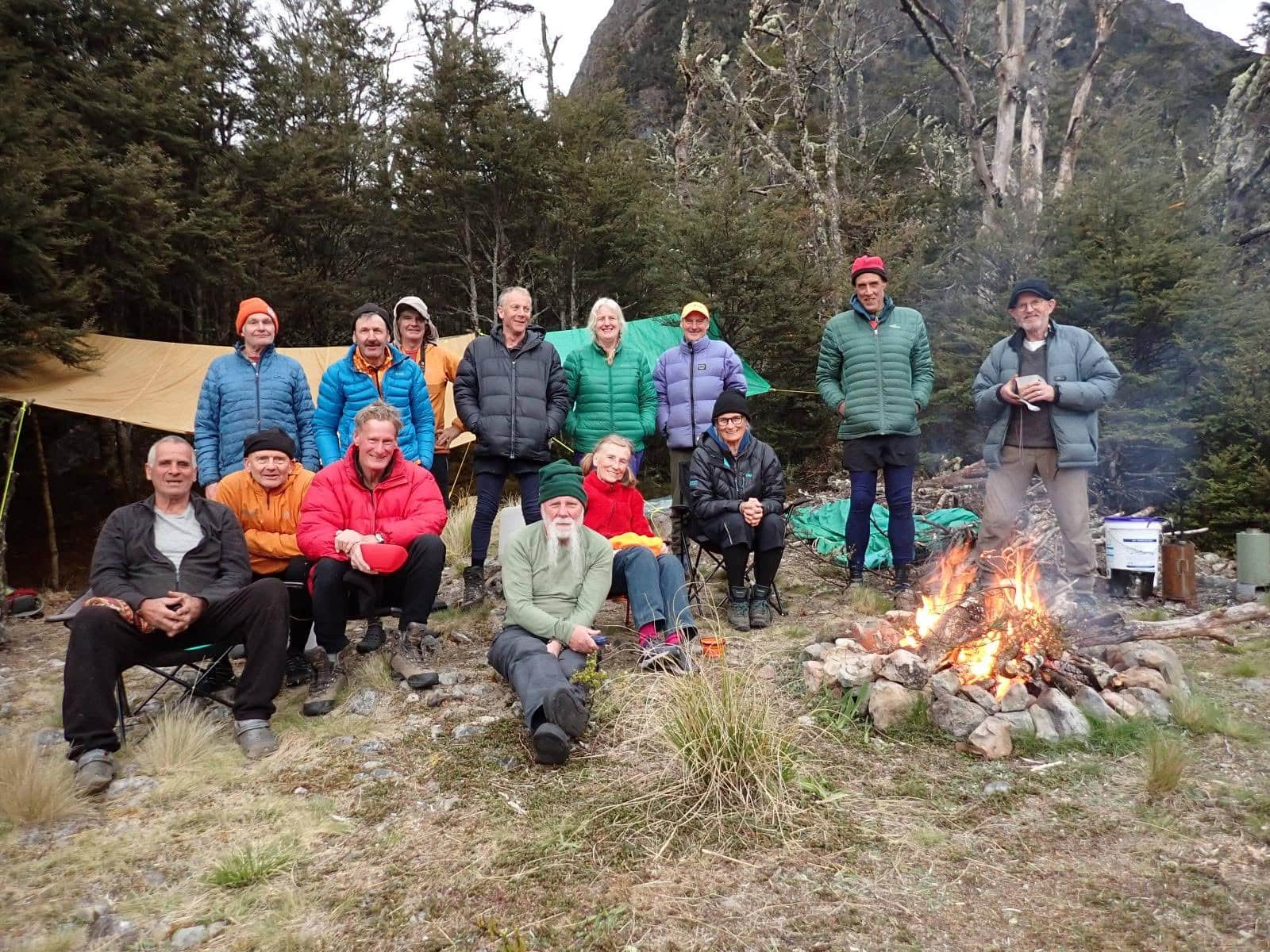
The 2025 team of Lost volunteers.
Back L-R: Marty Clapham, Jeff Hall, Jonathan Carr, Ken Ross, Jan Clayton-Greene, Mike Brewer, Paul Titus, Andy.
Front: James Jenkins, Joe Arts, David McBurney, Bryce Williamson, Jo Morgan, Ket Bradshaw.
WHY LOST STREAM MATTERS
Wilding pines are one of New Zealand's most serious environmental threats. Left unchecked, they spread across open tops and into native ecosystems, displacing the plants, birds, and ecological systems that make places like Lost Stream so special.
The Lost Stream catchment sits within the broader area managed by the South Marlborough Landscape Restoration Trust (SMLRT) — a huge sweep of South Marlborough backcountry from the Wairau River to the Clarence, including the Awatere, Branch-Leatham, and Molesworth. The work at Lost Stream is critical not just for the valley itself, but as a buffer preventing wilding spread east over the Raglan Range into the upper Wairau near the Rainbow Skifield.
Once out of the logging areas, that spread is already visible: Douglas Fir and other exotic trees blanketing landscapes that will not revert to natives in our lifetimes. Lost Stream is one of the last places where that future can still be prevented.
THE WORK
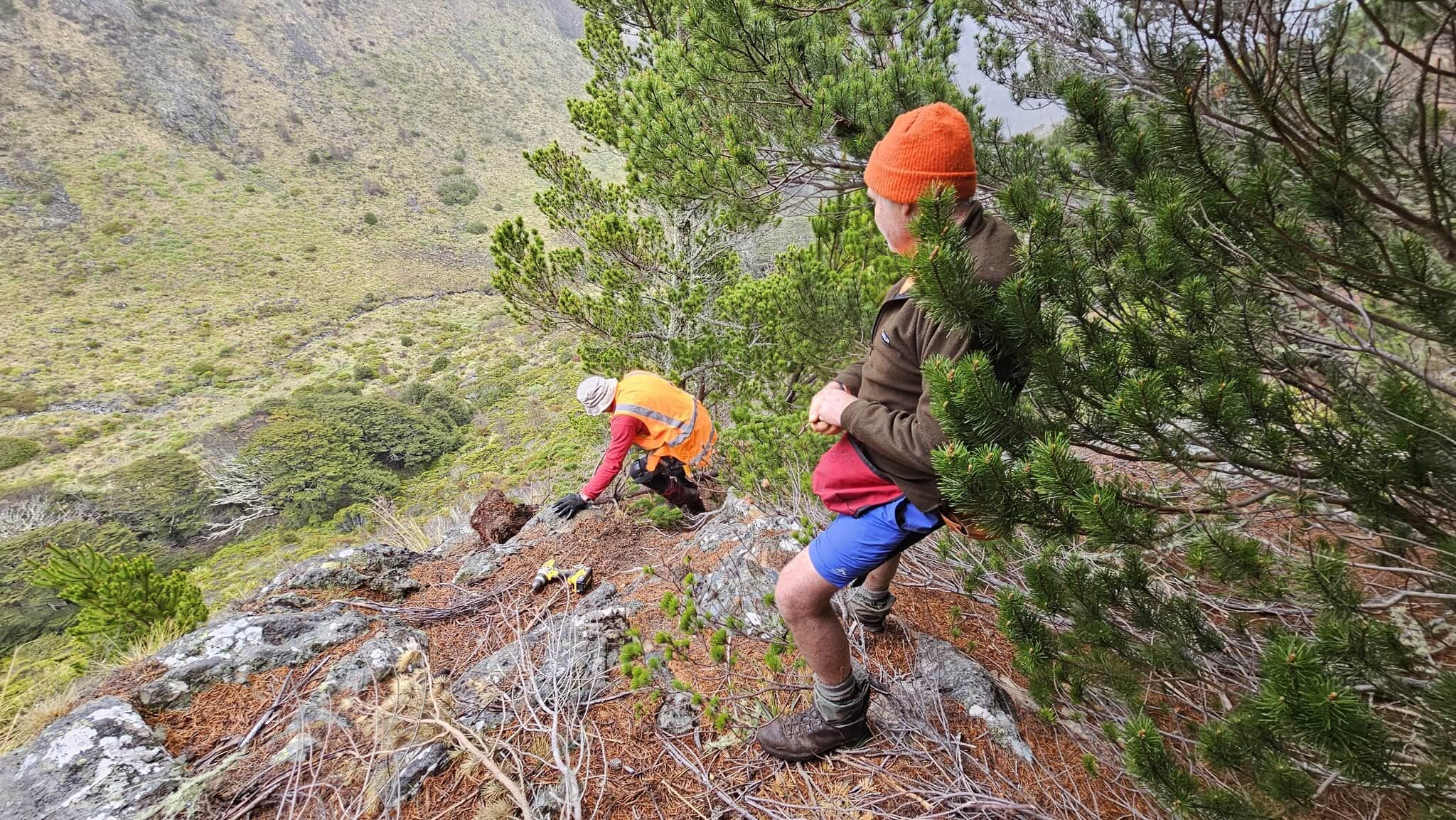
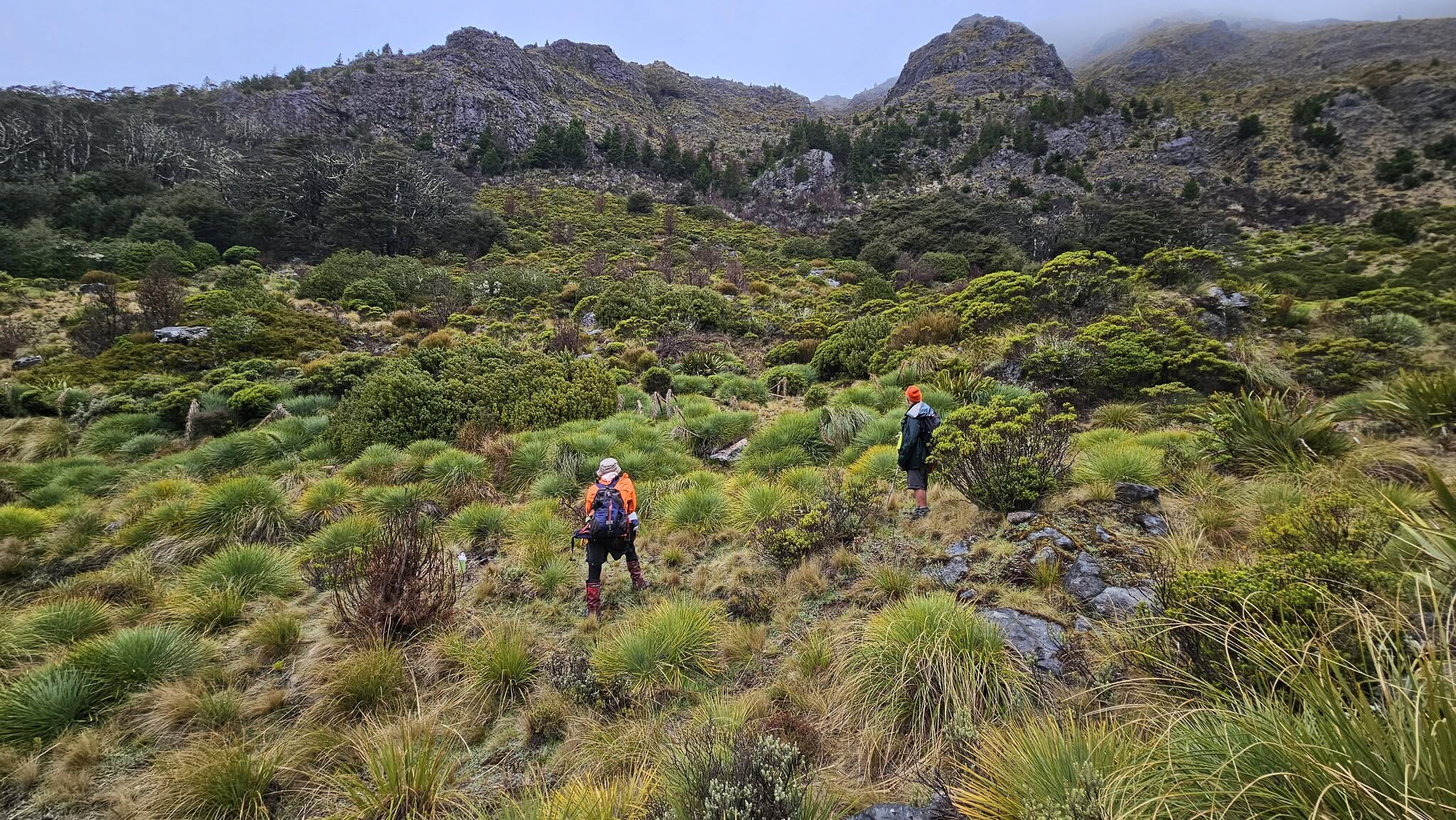
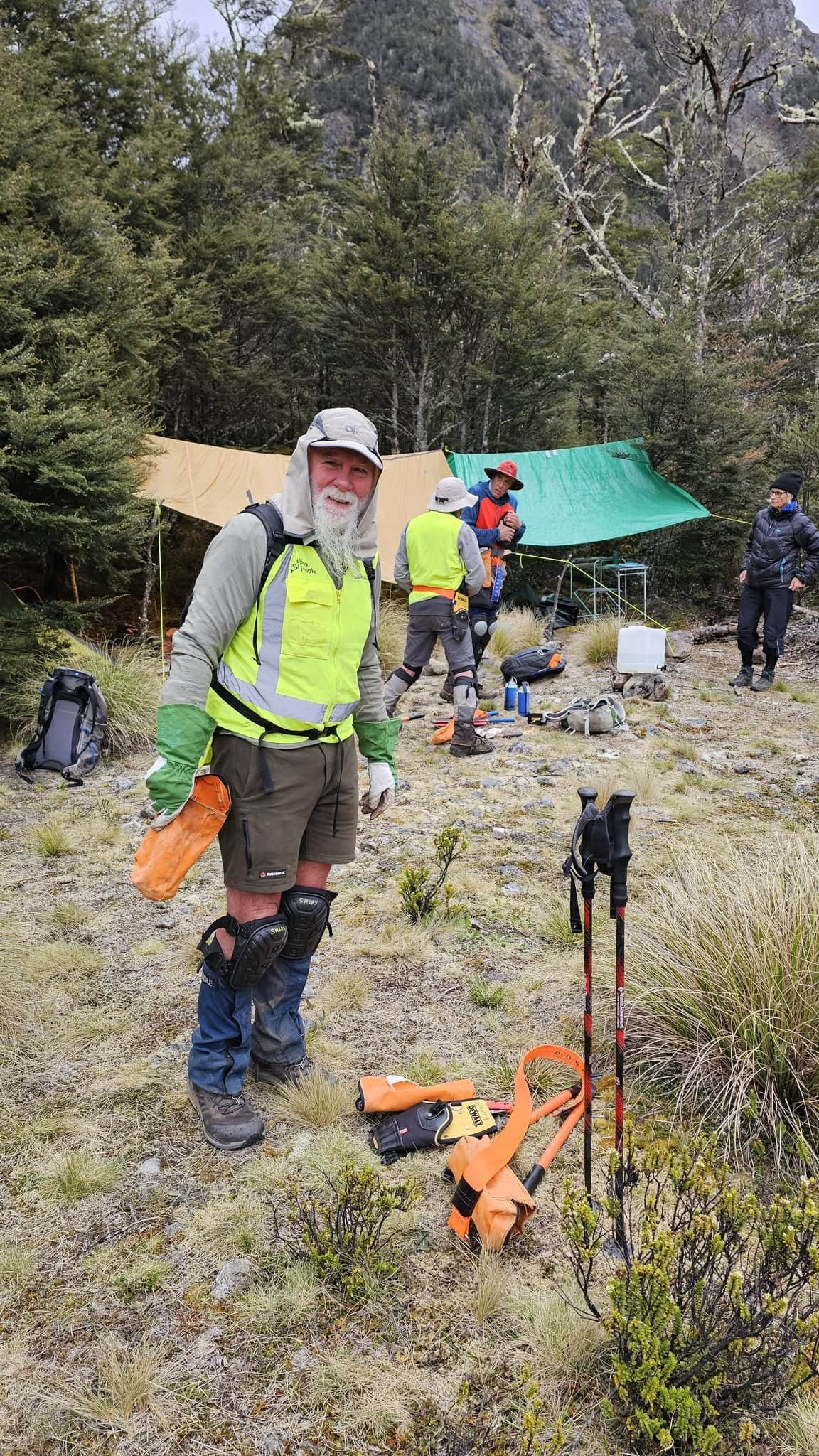
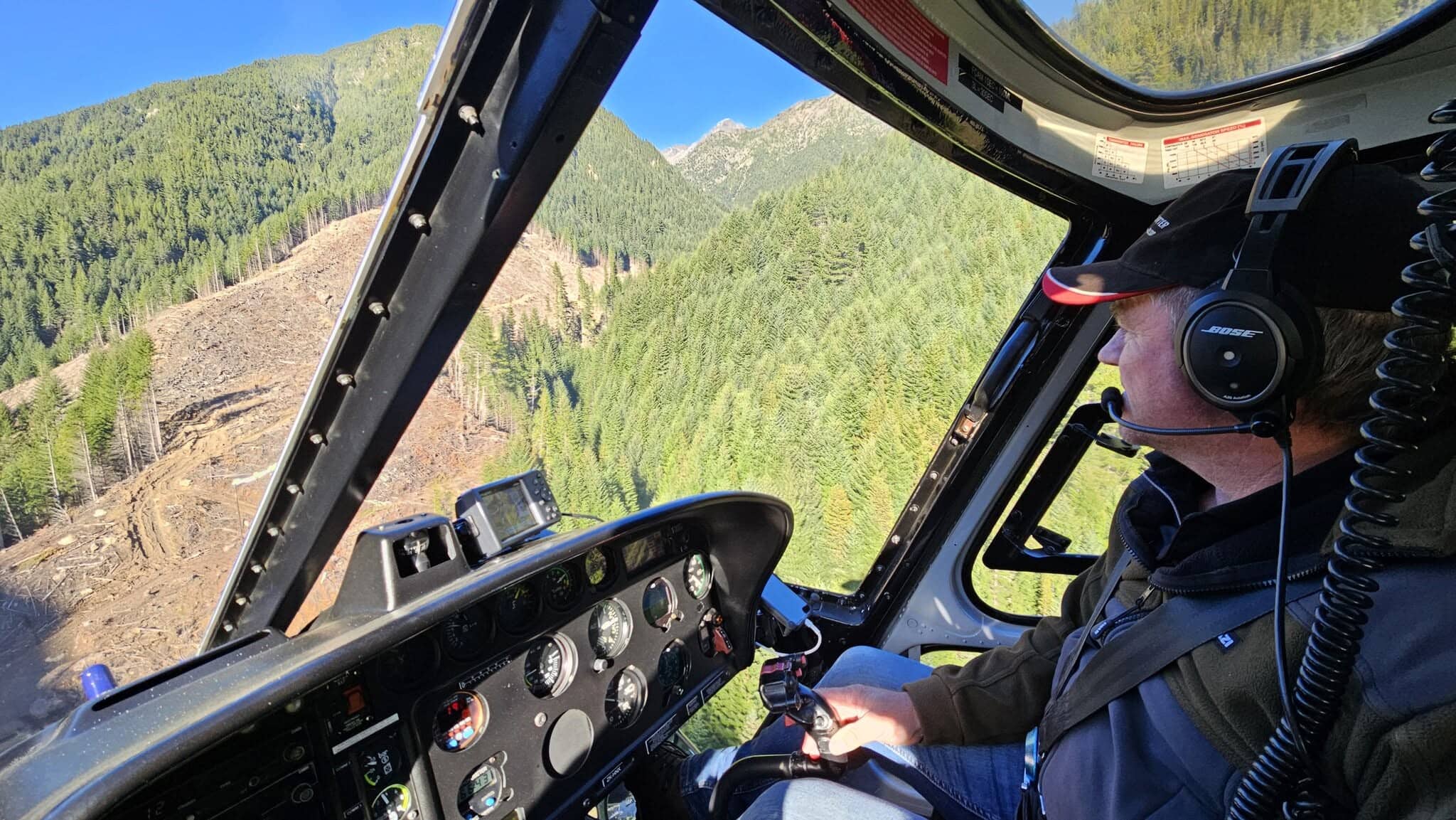
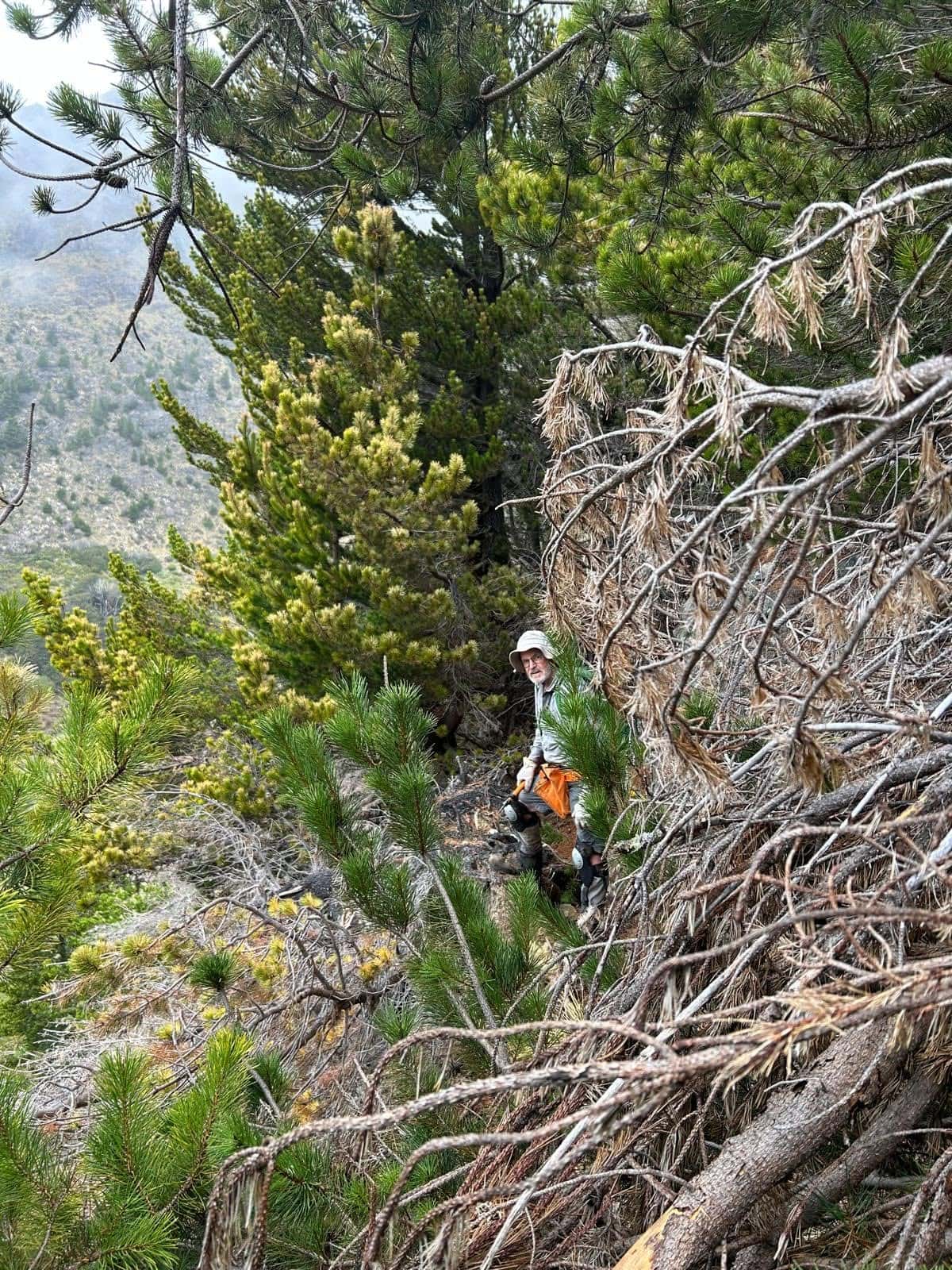
The 2025 Backcountry Week combined two methods of control. Earlier in the year, helicopter poisoning had been carried out across a large area of the Hidden Valley catchment — and by November, those trees were beginning to yellow and die. On the ground, teams fanned out across the steep terrain using hand techniques: cutting and pasting herbicide onto freshly cut stumps, drilling and filling trunks, and pulling seedlings growing beneath previously poisoned trees.
The previous year's hand control showed a success rate of at least 95% — a remarkable result for such remote and difficult terrain. The 2025 team extended that work further across Hidden Valley, covering a 100-metre-wide strip along key ridgelines up to 1,600 metres altitude, and clearing seedlings wherever they found them.
In three and a half days, fourteen volunteers covered approximately one third of the planned control area. There is more to do — but the momentum is real, and the results are building year on year.
WHAT THE FUND AND GENEROUS DONORS MADE POSSIBLE
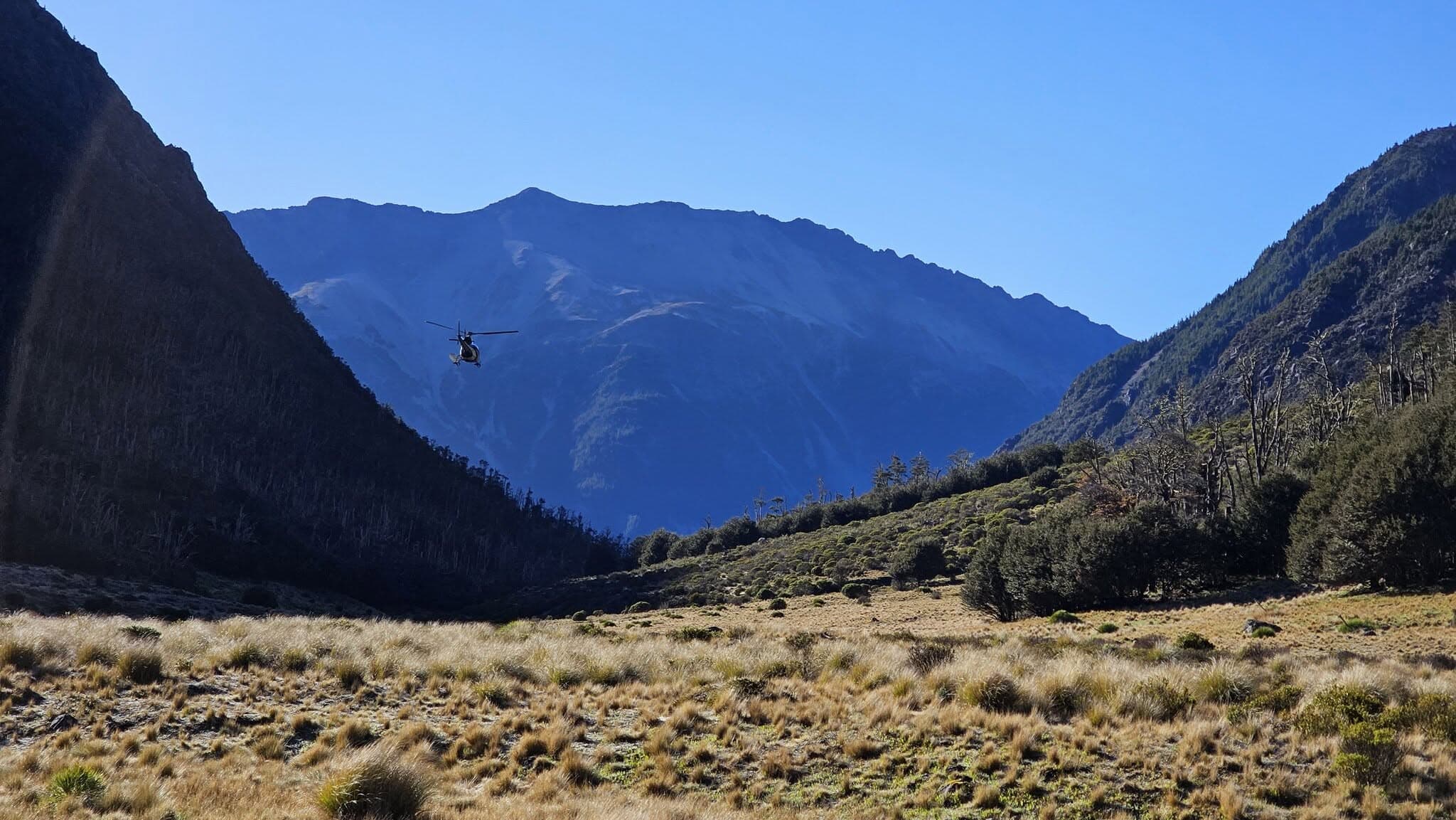
Getting a team of fourteen people into remote backcountry — with enough supplies for nearly a week of hard physical work — doesn't happen without resources. Thanks to the generous donors who contribute to the Marlborough Environment Fund, the $10,000 grant covered helicopter transport in and out of the hut, tools, and the food and general supplies that keep a volunteer team in the field.
It is unglamorous, essential work. And it only happens because donors choose to invest in it.
The Top of the South Community Foundation's Marlborough Environment Fund exists precisely for this kind of conservation — the long, patient, year-on-year effort that protects landscapes quietly and without fanfare, because the alternative is losing them.
To find out more about SMLRT and their restoration work across South Marlborough, visit marlboroughrestoration.org.nz
Together, we're building a stronger, more connected community across Te Tauihu — and protecting the wild places that make it home.
Other Recent News

The Shed That Keeps Cadets Going

More Than a Gym
A Grant That Launched a Career
Photos from Nelsontasman.nz, Only Marlborough and Unsplash.
Made with ♥️ by Avoca in Nelson, New Zealand