To restore a place, you must first remember it. Its names, its stories, and the people who have always belonged to it.
That is the work Te Ātiawa o te Waka-a-Māui Trust has been doing at two precious wetland sites in Marlborough.
THE PLACES
The two wetland sites are now commonly known as Waitoari, Waiora, in Koromiko, and Waipuna, Waiora in Waitohi/Picton. Their names were gifted by a whānau member, recognising that the naming of places of cultural significance is itself an important act - one that reasserts connection to whenua, records and carries forward history, and gives expression to the values held within the landscape.
The name Waiora speaks to the life-giving nature of these waters and the role they play in sustaining the health and mauri of the whenua and communities. Through the act of naming, the cultural meaning of these places is made visible, their histories are carried forward, and their significance is affirmed for generations to come.
In a significant milestone, Waipuna Stream has also been formally recognised by LINZ as a waterway — not a stormwater drain. A small but meaningful reclamation, and one that reflects the broader intention of this project: to give these places back to themselves.
THE MAHI
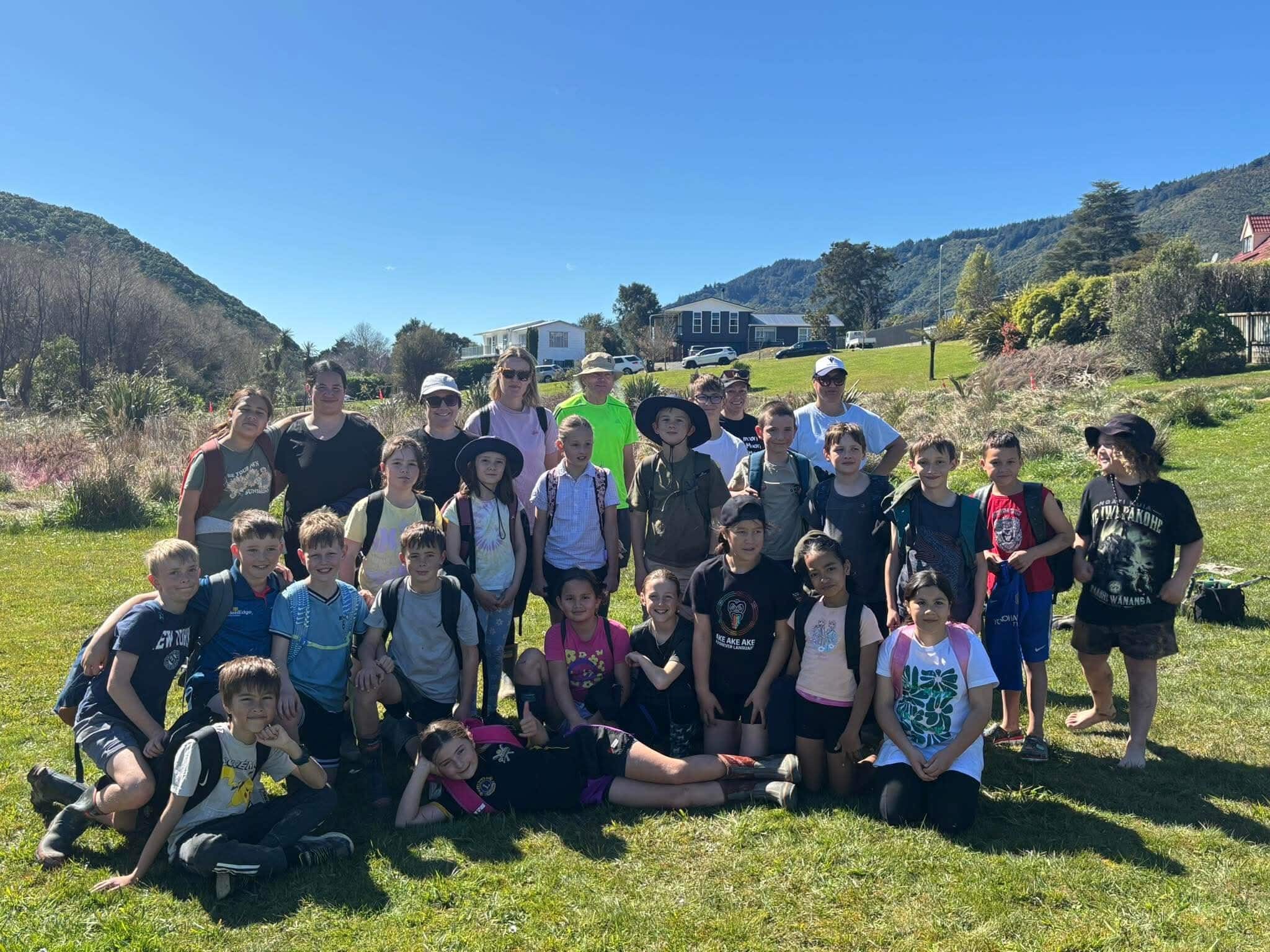
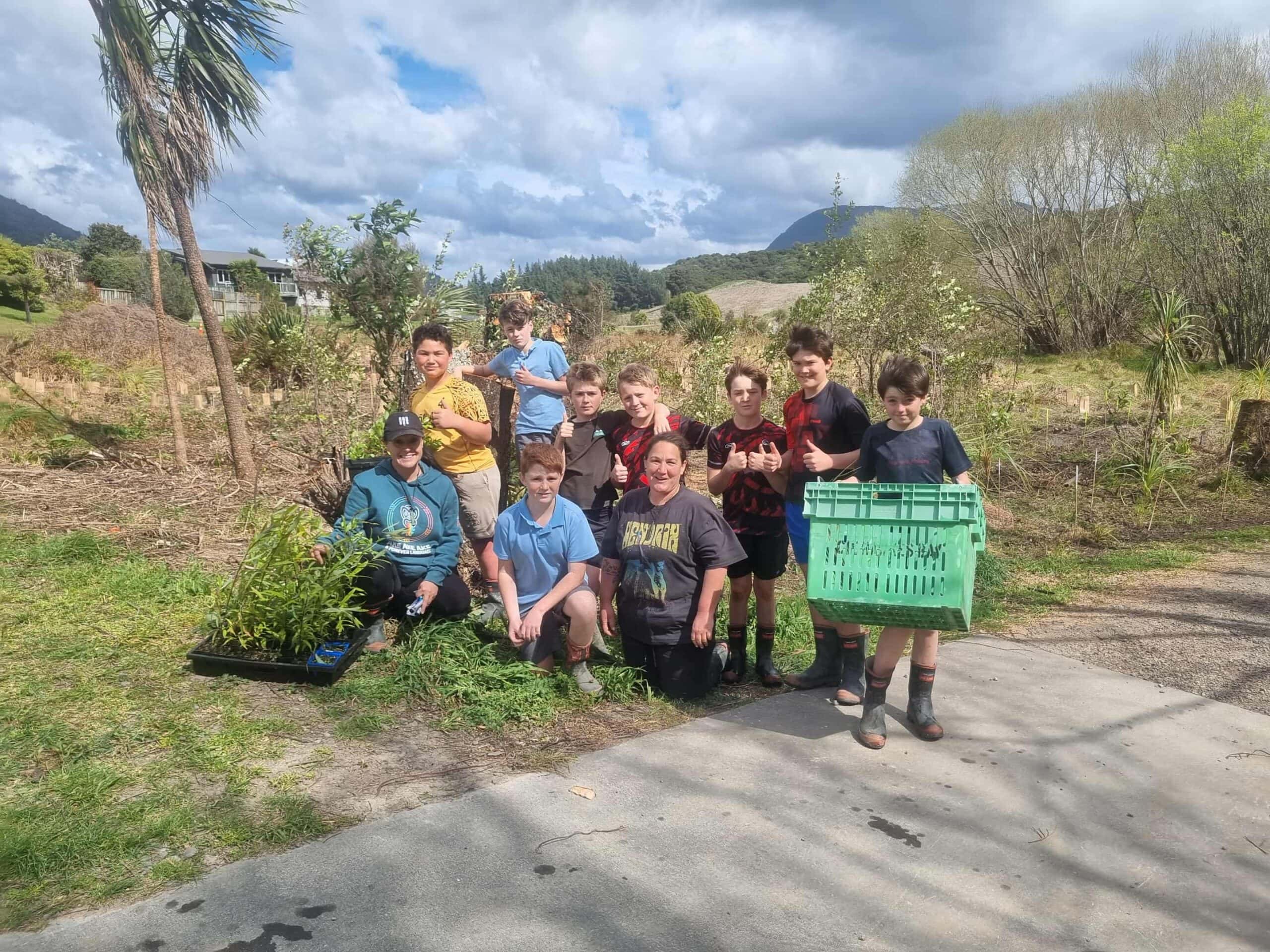
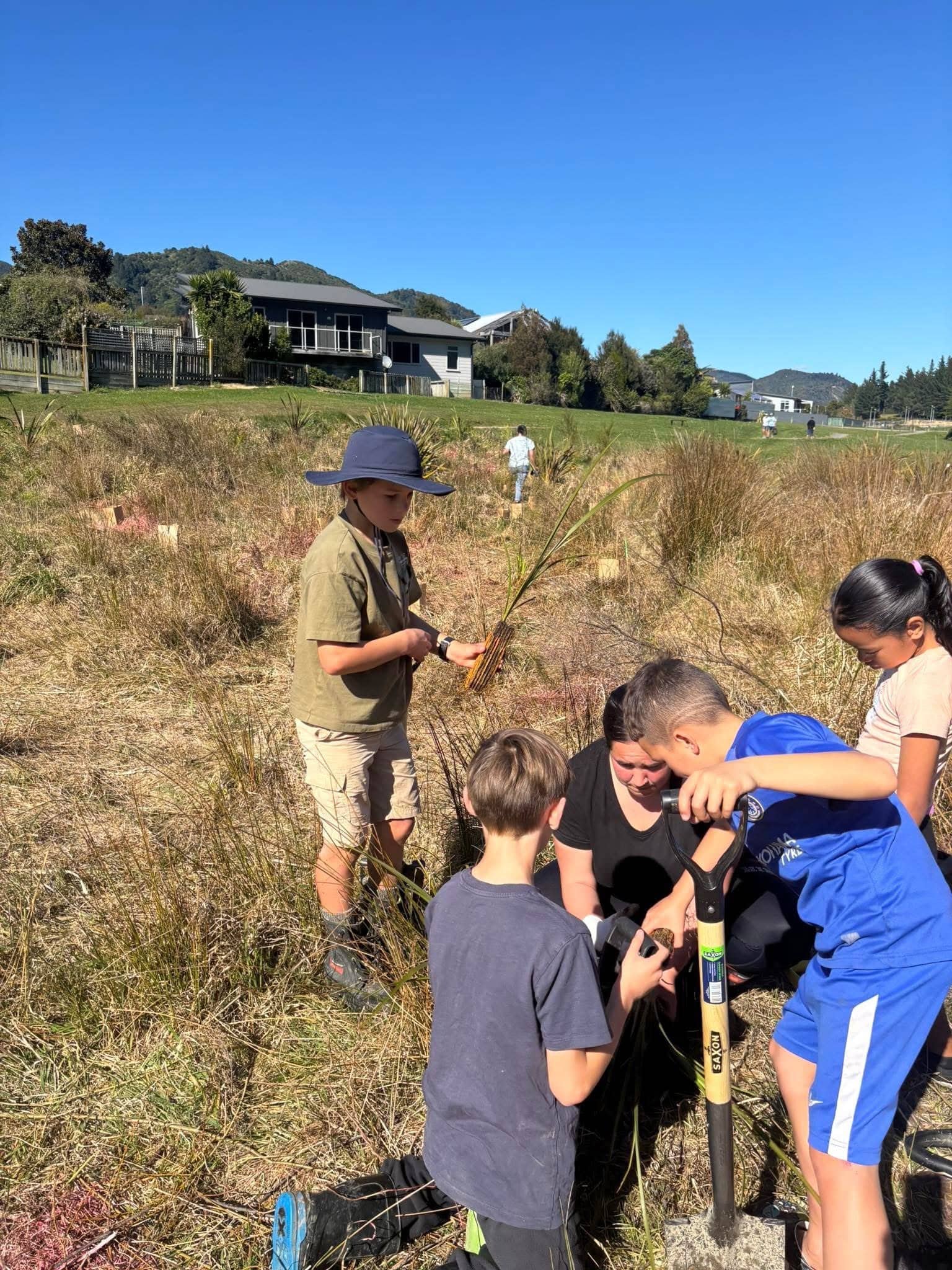
Between August and October 2025, Te Ātiawa whānau, Waikawa Bay School tamariki, and Queen Charlotte College rangatahi planted over 2,000 native plants across four planting days. The plant species were chosen carefully for their ecological value, cultural significance, and mahinga kai potential.
The planting design was deliberate and layered. Hardy species were established first as nursery crops, creating conditions for podocarps like Kahikatea and Mātai to be planted in years two and three. Wherever possible, original species were chosen — including Koromiko, after which the surrounding area is named, and Tōtara, which was once abundant in the area. Heirloom harakeke was sourced from the very last flax bush remaining at Blue Hole, preserved and grown by Wild About Natives. Highly prized weaving species Kiekie were also eco-sourced and planted — a living thread connecting the site to toi Māori practice.
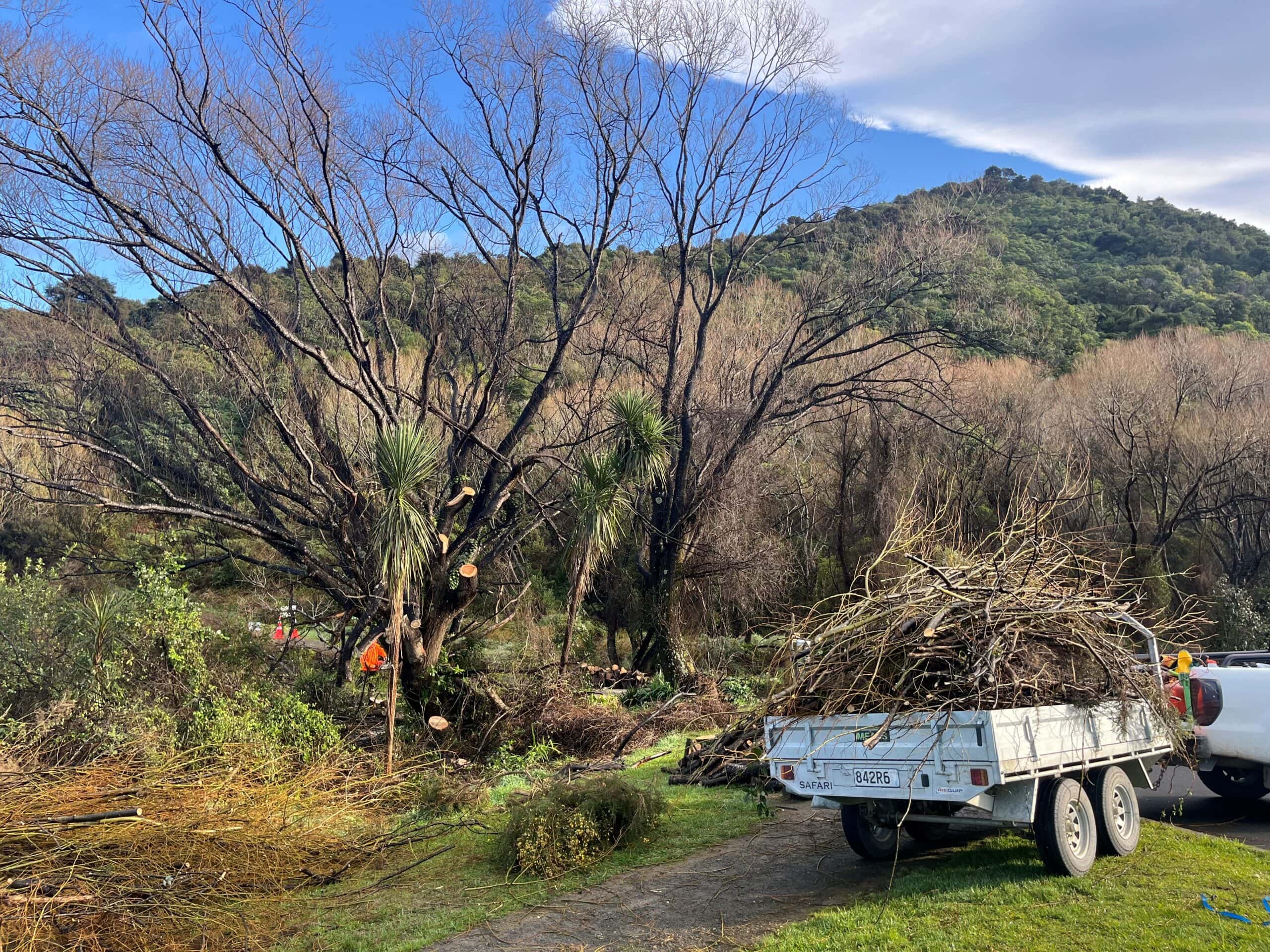
Before planting could begin, significant weed removal was required. Contractors removed approximately 12 loads of invasive willows and woody weeds that had been choking the riparian zones, transforming the health of both sites. The cleared wood was made available for the community to take as firewood — a small act of generosity that drew people in and strengthened local connection to the project.
KAITIAKI IN TRAINING
Pest traps were purchased and deployed at Waipuna, with Queen Charlotte College's Kaitiaki group trained to monitor them. Their results are now being entered into the national pest-management database — ensuring the mahi continues long after the planting is done.
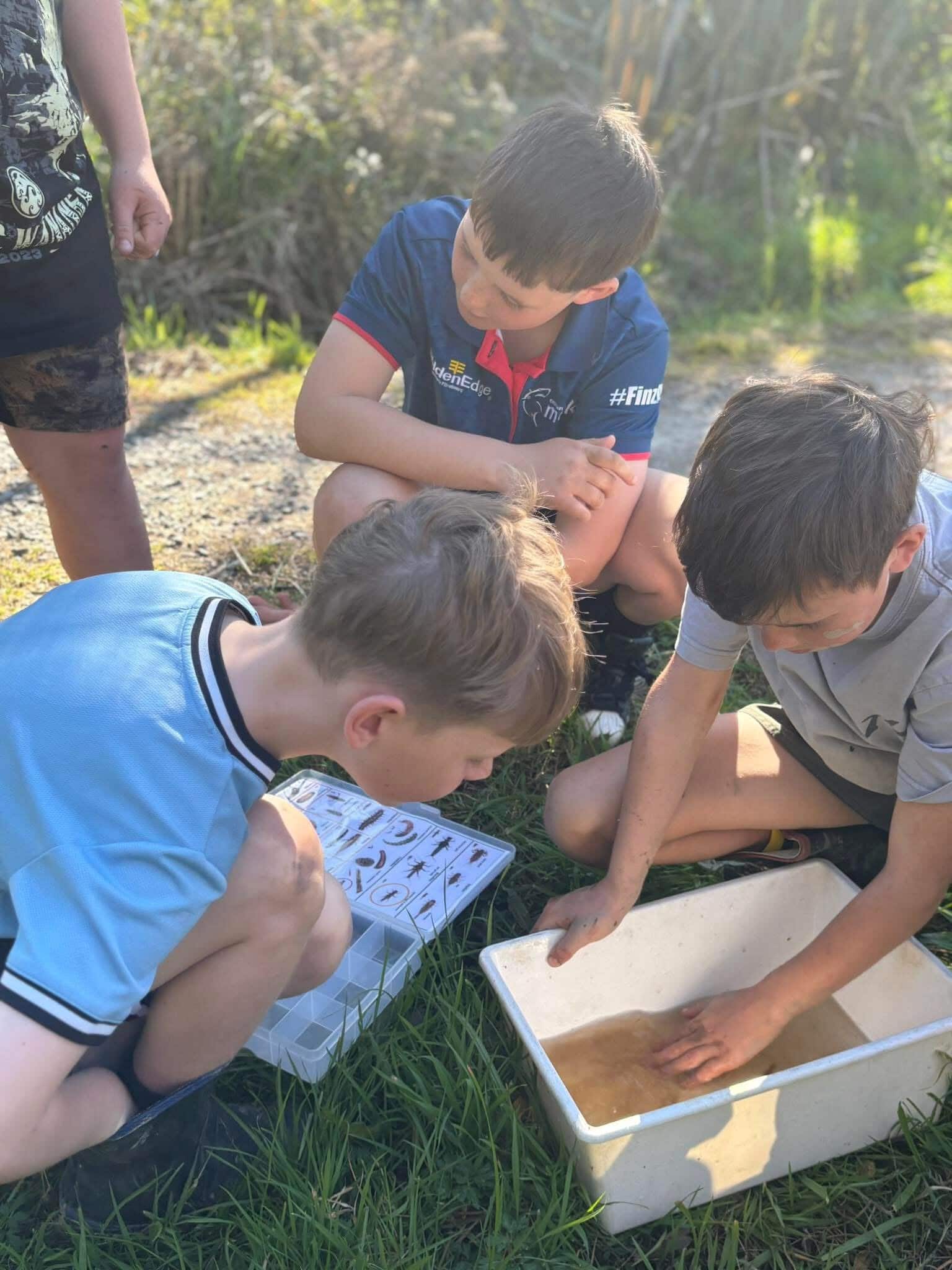
Waikawa Bay School conducted stream studies and bird surveys on site. Both schools plan to continue using the wetlands as kura taiao — outdoor classrooms — with activities including bio-blitzes, weta hotels, and gecko gardens planned for the coming seasons.
Cultural monitoring has been woven throughout, with whānau and tamariki setting hīnaki to monitor tuna (eels), conducting stream studies, and carrying out bird surveys. A photo study has been established to track change over time from the same vantage points — a long view of restoration.
WHAT IT MEANS
Approximately 80 community members participated across planting and cleanup events. Inter-iwi partnerships were strengthened, with Ngāti Kuia sharing expertise from the Te Hoiere Project and joining planting days. Kaumatua Philip Sim was a constant presence on site, sharing his whānau's kōrero and mapping significant landscape features — history recorded so it is not lost.
The restoration has created accessible, meaningful spaces for education, cultural learning, and community connection. It has affirmed Te Ātiawa's authority over the whenua, contributed to Marlborough's regional biodiversity, and laid the groundwork for continued ecological recovery in the years ahead.
This is kaitiakitanga in practice — the long, patient, loving work of people who understand that caring for land is caring for people.
Donor generosity, channelled through the Top of the South Community Foundation, helped make this first year of restoration possible. There is more to come.
The whole project was contributed to by: Lotteries Funding – Environment and Heritage Fund, KiwiRail, Kerry & Ivan Fearne (landowners of Waitoari, Waiora in Koromiko) and the trust has been supported by service, advice and contractor support through Michaela at Wild About Natives, Mish at Wild Waikawa, Dawn Chorus and Waikawa Marae, and Kerry & Ivan Fearne, property owners who have long had a vision to restore Waitoari, Waiora.
To find out more about Te Ātiawa o te Waka-a-Māui Trust and their restoration mahi, visit teatiawatrust.co.nz
Together, we're building a stronger, more connected community across Te Tauihu — and protecting the places that matter most.
Other Recent News
The Shed That Keeps Cadets Going
More Than a Gym
A Grant That Launched a Career
Photos from Nelsontasman.nz, Only Marlborough and Unsplash.
Made with ♥️ by Avoca in Nelson, New Zealand